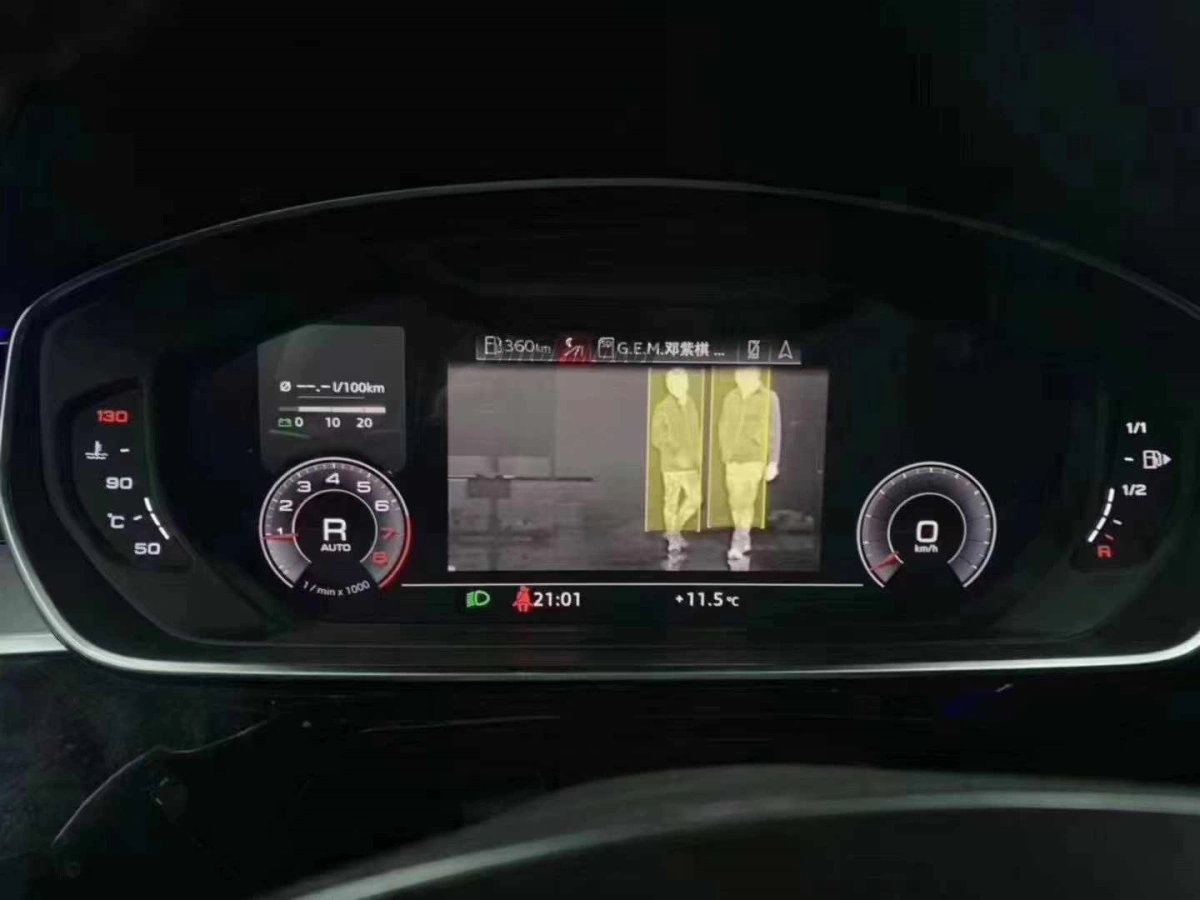
At the intersection of millimeter-wave radar and infrared thermal imaging, Audi’s lighting engineers draw a map of the night on the dashboard. When the outline of a pedestrian 300 meters away appears on the display screen, what the driver gets is not only a warning prompt but also a technological scepte to overcome night obstacles.
Approximately 60% of traffic accidents occur under poor visibility conditions, among which the mortality rate of accidents at night is more than three times that during the day. For luxury models like the Audi A6 and Q8, which are suitable for both business and family trips, traditional headlights often fail to perform well in thick fog, heavy rain or completely dark rural roads. The original factory night vision system, through active infrared technology, can convert blind spots into clear images at night, extending the detection range to 300 meters – far exceeding the 150-meter illumination range of high beams.
1,Why do We Need Night Vision Systems: An Optical Revolution Beyond the Human Eye
The fatal shortcoming of driving at night
The cruel data of visual limitations: The effective visual range of the human eye when driving at night is only 40% to 60% of the range illuminated by high beams, and the reaction time to suddenly appearing pedestrians is 1.5 seconds longer than during the day. This brief delay is sufficient for a vehicle traveling at 60km/h to extend the braking distance by 25 meters. The night vision system, through thermal imaging and infrared technology, extends the effective detection range to 300 meters, which is equivalent to providing drivers with more than 10 seconds of prediction time
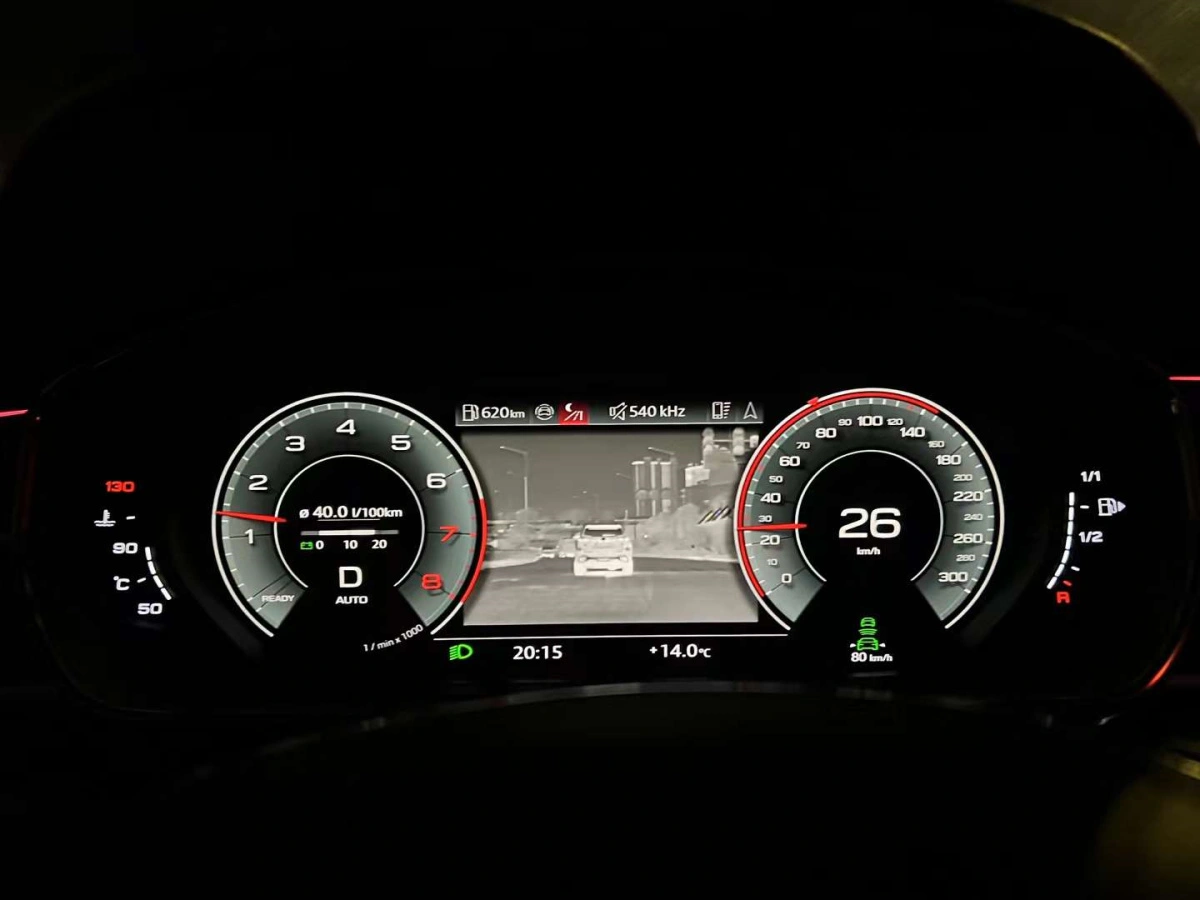
Absolute suppression in special scenarios: When driving at high speed in thick fog, the night vision system can identify the faulty vehicle ahead 3.2 seconds earlier than the naked eye, successfully avoiding rear-end collisions. This system performs particularly prominently in the following environments:
- Thick fog/heavy rain: Infrared rays penetrate water mist particles, maintaining clear imaging.
- Unlit rural roads: Active infrared irradiation is used to identify pedestrians or animals along the roadside.
- Glare environment: Suppress the interference of LED headlights in the opposite lane.
2 Audi Night Vision’s intelligent protection chain
Audi’s night vision system is by no means a simple “night camera”, but a deeply integrated active safety hub. When the infrared camera or grille radar module installed in the vehicle logo detects a risk, the system will initiate a multi-level response
Primary warning: The dashboard displays a yellow human-shaped icon, indicating that there is a heat source target ahead
Risk escalation: If the vehicle continues to approach without braking, the icon turns red and beeps
Emergency intervention: Some models can be linked to the pre-collision system to pre-tighten the seat belts
List of core components
Whether it is A6, C8, A7, A8, Q7 , Q8, e-tron night vision upgrade includes the following modules:
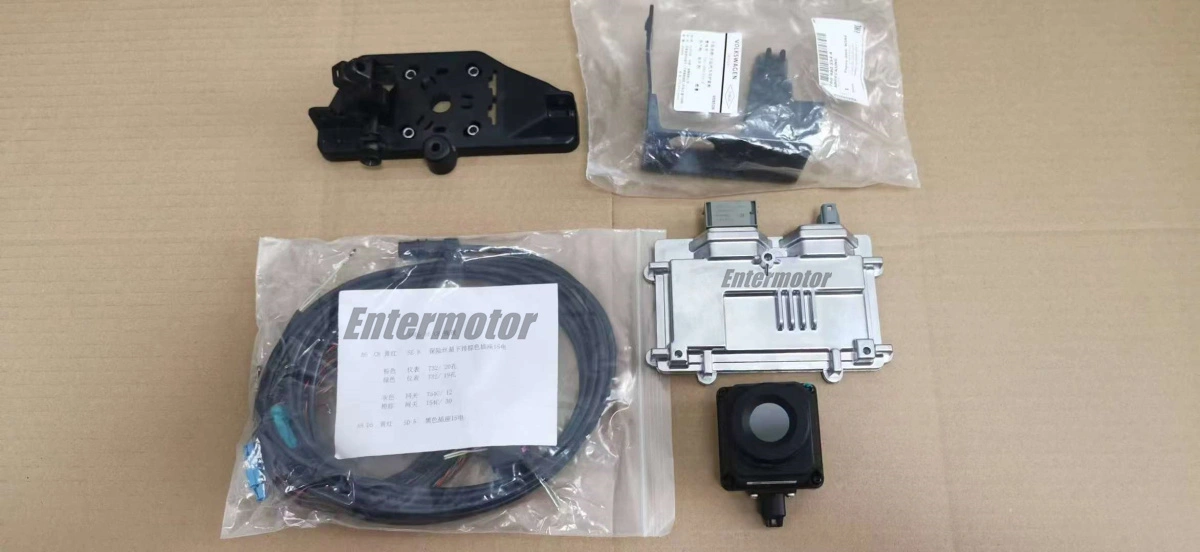
- Infrared thermal imager assembly: The camera is integrated into the front four ring markers of the car and installed on the air intake grille
- Control unit: Processor supporting heat source identification (including heat dissipation module)
- Wiring harness set: Flame-retardant wires that comply with Audi LV214 standard
Modification process
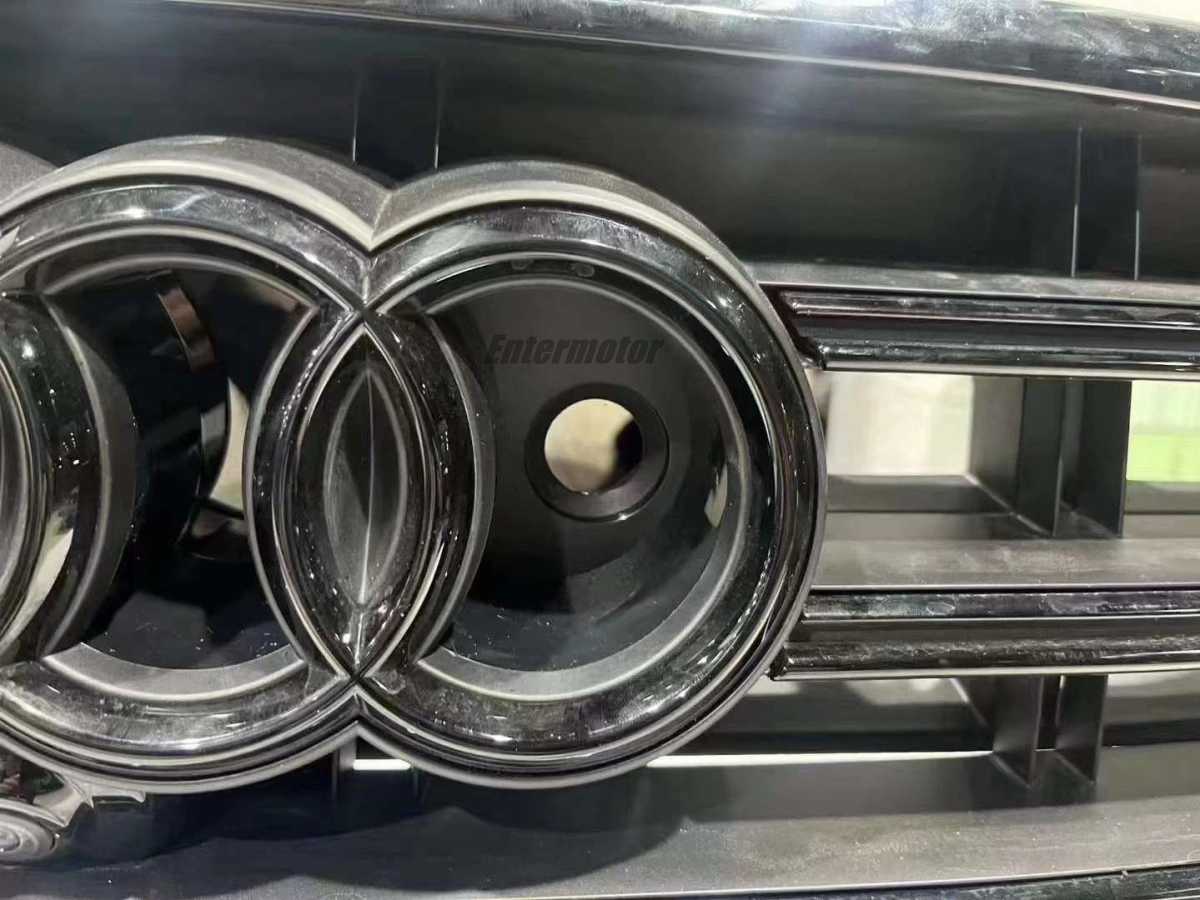
Modification of the first four cup labels:
1,Remove the front bumper → Replace the four-ring logo with a camera hole (or you can directly drill holes in the original logo)→ Hide the wiring to the instrument panel and gateway
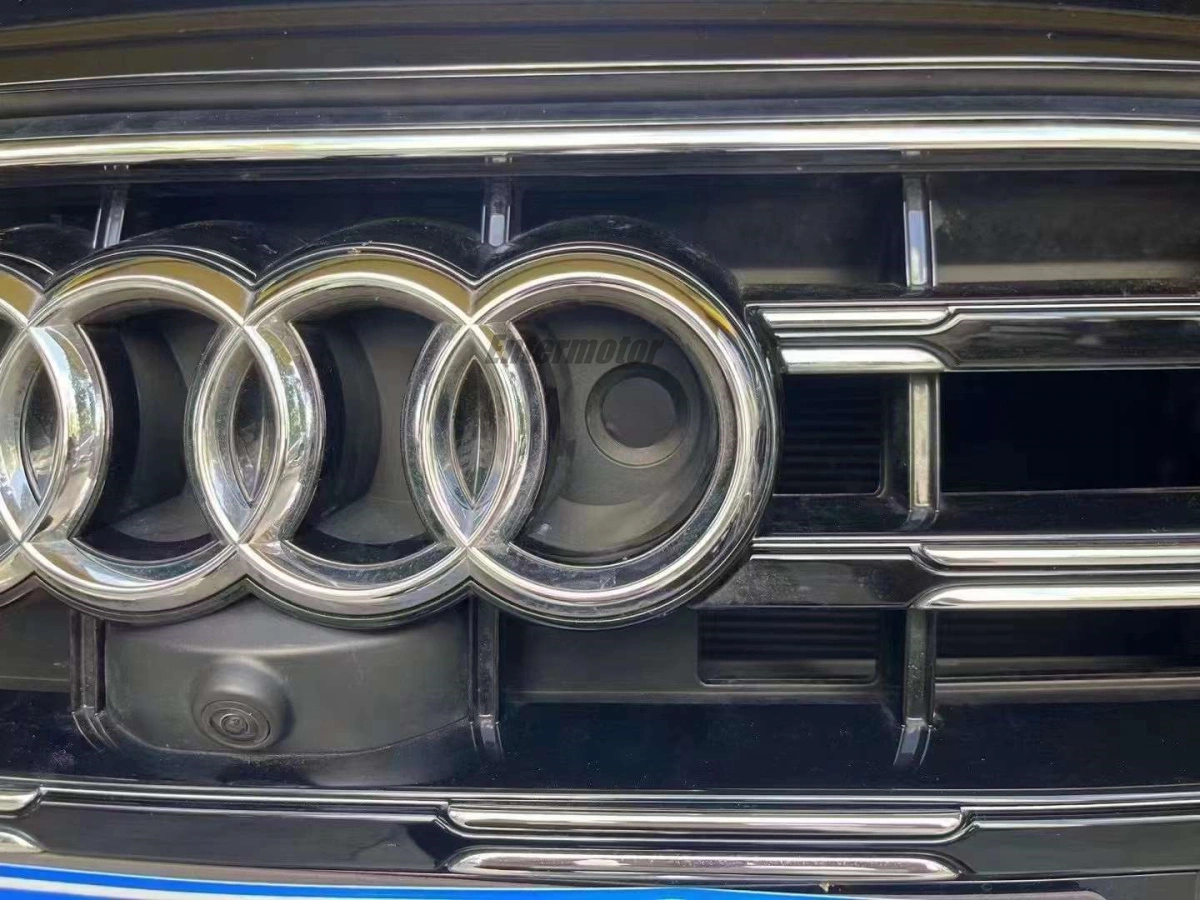
2,Gateway activation: Use ODIS to write codes to the relevant modules
When driving out of the company’s basement in the dead of night, a warm humanoid contour mark appeared on the dashboard – it was not a cold technological symbol, but the Audi engineers’ persistence in the “zero-collision vision”. Night vision systems are reshaping our relationship with darkness: darkness is no longer an opponent to be conquered, but a driving companion that can be empowered by technology. In this parallel world constructed by infrared spectra, every night trip becomes a reliable and safe journey.